February 21, 2025
Cavities, also known as dental caries, are small holes that form in the teeth due to decay. They develop when bacteria in the mouth produce acids that erode the protective enamel, leading to damage to the tooth structure. If left untreated, cavities can grow larger, causing pain, infections, and even tooth loss. To prevent further complications, dentists treat cavities using cavity fillings, a common and effective dental procedure. There are various kinds of fillings, and you can choose according to your preference.
What is a Cavity Filling?
A cavity filling is a dental procedure used to repair a tooth damaged by decay. When bacteria cause a cavity, the decayed portion is removed, and the empty space is filled to restore the tooth's function and prevent further damage.
If you are wondering what are cavity fillings made of, then the answer is they can be made of different materials starting from composite resin to even gold.
These fillings prevent cavities from worsening and help maintain oral health. If you don't get treatment, then the decay can spread, leading to pain, infection, or even tooth loss.
Types of Cavity Fillings
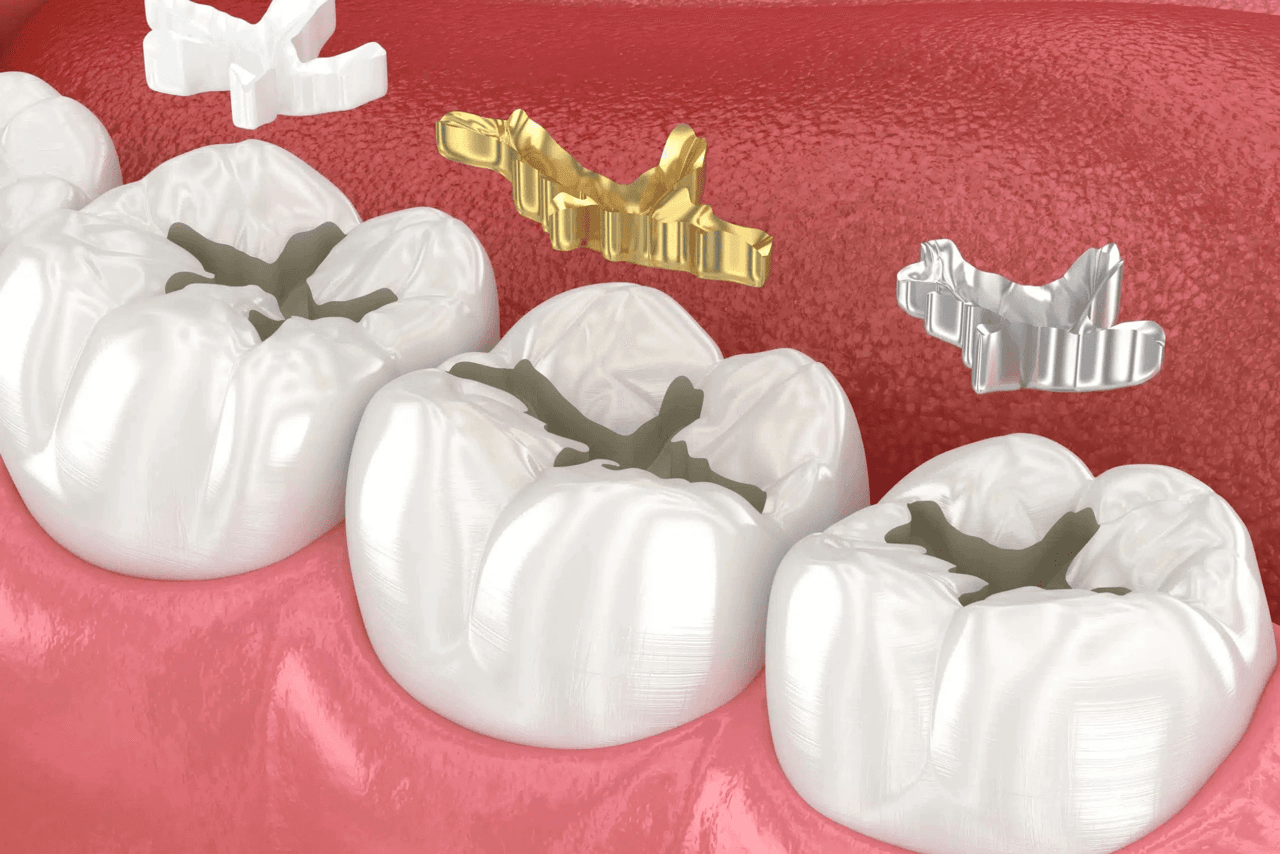
Here are a few types of fillings with distinct positives regarding durability, aesthetics, and affordability:
Amalgam Fillings
Amalgam fillings are an older, tried-and-true version made from a mixture of metals, such as silver, mercury, tin, and copper. They are incredibly durable and have the strength to withstand strong forces of chewing. This is the reason they are great for use in molars.
Composite Fillings
Composite fillings are made from a resin material with a colour very close to natural teeth, making them a popular choice for front and visible teeth. They also adhere to the structure of the tooth, providing added strength. However, in specific cases where there is heavy pressure during chewing, composite fillings may wear out quicker than amalgam fillings.
Ceramic Fillings
Ceramic fillings are made from porcelain, and they blend very easily with your natural tooth colour. They even resist stains better than other types of fillings. This makes them ideal for visible front teeth and will give you a bright and clean smile.
However, while ceramic fillings are strong and long-lasting, they can be a bit more expensive than other options like amalgam or composite fillings. They may also require more of your tooth to be removed before placement.
Gold Fillings
Gold fillings are very strong and can last decades with good maintenance. They don't corrode and offer high chewing strength. They are, however, costly and need multiple visits to the dentist for insertion. They also have a gold colour, making them very conspicuous, which may not be everyone's first preference.
Glass Ionomer Fillings
Glass ionomer fillings are made from a blend of acrylic and a specific type of glass called fluoroaluminosilicate. This material releases fluoride, which helps strengthen the surrounding tooth structure and prevent future decay. Because of this, glass ionomer fillings are mostly used for children's teeth or in areas that need extra protection.
While they are less durable than ceramic or amalgam fillings, they work well for small cavities or as a temporary solution.
The Cavity Filling Procedure
Getting a cavity filled is a simple and routine procedure that usually takes less than an hour. Here is the full procedure involved in cavity filling:
- Diagnosis: The endodontist will first examine your tooth and may take X-rays to determine the extent of the decay. This helps in selecting the best treatment approach.
- Anaesthesia: A local anaesthetic is applied to numb the area for a painless experience.
- Removing Decay: The decayed portion of the tooth is drilled out carefully to avoid causing any more damage. In cases where the decay has reached the tooth pulp, the dentist may need to perform a root canal before placing the filling to save you from tooth extraction.
- Filling Placement: The chosen filling material is placed to rebuild the tooth structure.
- Polishing & Final Adjustments: The filling is finally shaped and smoothed for a good bite.
There might be some sensitivity after the procedure, but this usually disappears within a few days. To fix a tooth cavity effectively and ensure your filling lasts longer, maintain good oral hygiene and attend regular dental check-ups.
When to Replace a Filling?
If you feel sensitivity in your teeth, pain when you're chewing, or find cracks or rough spots on your filling, it's time to get a replacement. A worn-out filling can provide an entry for bacteria and lead to additional decay and infection.
In fact, putting it off too long could result in a root canal or loss of the tooth, costing you more money and time.
So, schedule an appointment today with Complete Smiles for painless filling replacements and all other dental solutions by highly experienced dentists.

Dr. Malavi Sivakanesan (292322)
Dr. Malavi Sivakanesan is the principal dentist and co-founder at Complete Smiles in Harrow, Greater London. She is responsible for establishing the Complete Smiles brand throughout the United Kingdom and Europe and has 5 successful practices under her strong leadership.