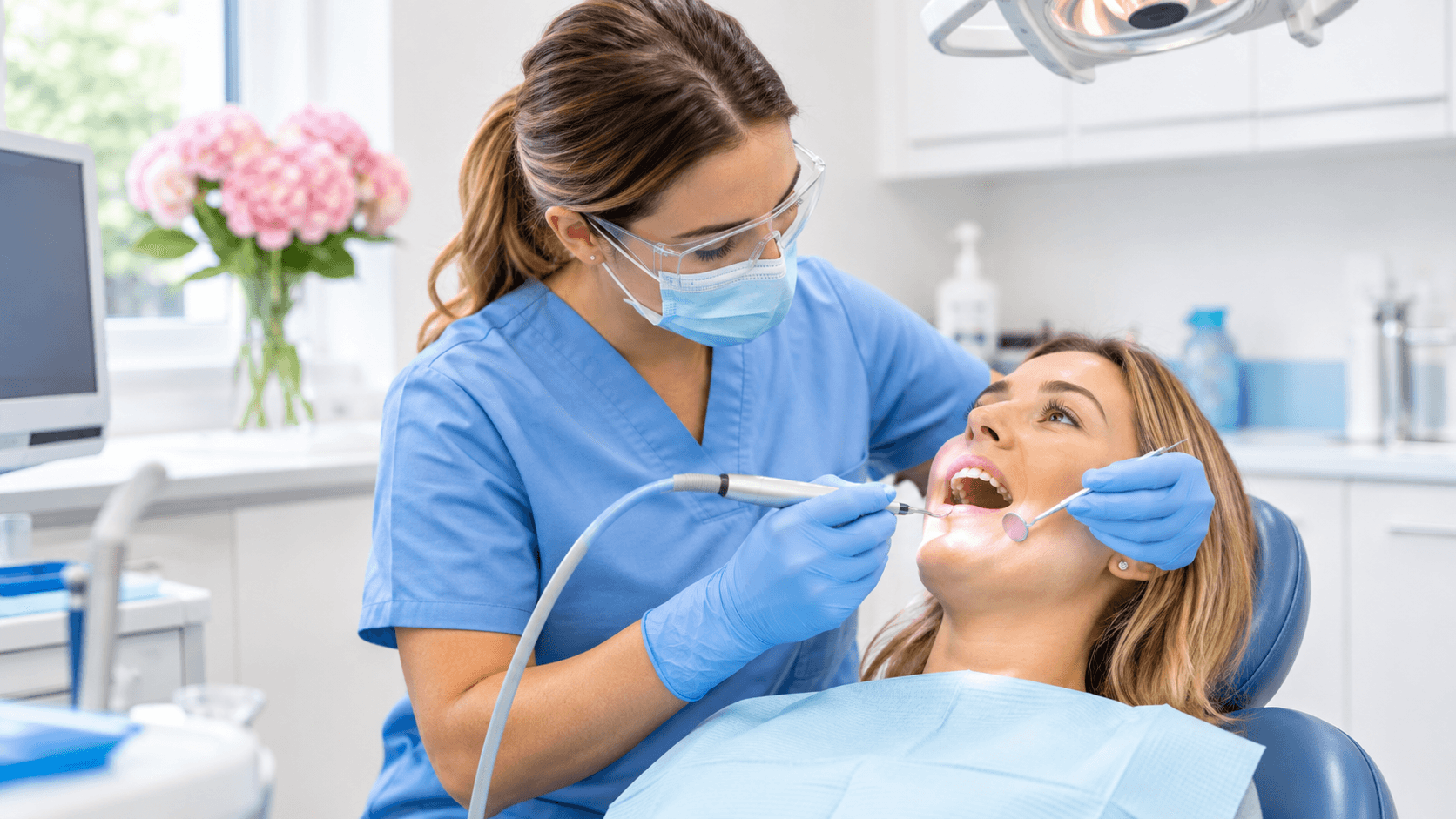
A dental hygienist is a registered oral health professional specialising in preventive care, teeth cleaning, and supporting your long-term gum and oral health. Dental hygienists play a crucial role in helping patients maintain healthy smiles and prevent dental problems before they develop.
What Is a Dental Hygienist?
A dental hygienist is a registered dental care professional trained to focus on preventing oral diseases and promoting oral health. Their primary role is to help patients avoid gum disease and tooth decay through professional cleaning, screening, and personalised advice. Dental hygienists work closely with dentists as part of a wider dental care team, ensuring comprehensive and compassionate care for every patient.
Unlike dentists, dental hygienists concentrate on maintaining oral health and preventing problems rather than performing complex treatments. They are trained to identify early signs of oral health issues and empower patients to improve their daily dental routines.
Key Responsibilities and Daily Tasks
Dental hygienists focus on prevention, maintenance, and patient support. During a typical appointment, a dental hygienist will:
Clean teeth
Remove plaque and tartar (calculus) that regular brushing and flossing cannot eliminate.
Scale and polish
Use specialised tools to clean above and below the gum line, followed by polishing to smooth tooth surfaces.
Assess oral health
Examine the mouth for early signs of gum disease, tooth decay, or other concerns.
Apply preventive treatments
Use fluoride varnish or fissure sealants to protect teeth from decay.
Provide patient education
Offer tailored advice on brushing, flossing, diet, and lifestyle factors affecting oral health.
Support smoking cessation
Provide guidance to help patients quit smoking, improving both oral and overall health.
Update dental records
Document findings and treatments to maintain continuity of care.
Dental hygienists also support nervous patients by offering reassurance and adapting their approach to ensure comfort throughout the visit.
Treatments Provided by Dental Hygienists
Dental hygienists perform a variety of treatments that extend beyond routine cleaning. At Complete Smiles, these include:
Professional teeth cleaning
Removal of plaque and tartar using ultrasonic scalers and hand instruments.
Scaling and root planing
Deep cleaning below the gum line, particularly for patients with gum disease.
Polishing
Smoothing tooth surfaces to reduce plaque accumulation.
Fissure sealants
Protective coatings applied to the chewing surfaces of back teeth, mainly for children and young people.
Oral hygiene demonstrations
Teaching effective brushing and flossing techniques.
For a detailed overview of available treatments, see our Dental hygiene service.
How Dental Hygienists Support Your Oral Health
Dental hygienists play a vital role in preventing gum disease and supporting overall wellbeing. By removing harmful plaque and bacteria, they help reduce the risk of:
- Gum disease (gingivitis and periodontitis)
- Tooth decay and cavities
- Bad breath (halitosis)
- Tooth loss related to untreated gum problems
They monitor for early signs of oral health issues and refer patients to dentists for further assessment or treatment when necessary. For patients undergoing gum disease treatment, hygienists work closely with dentists to provide ongoing care. Learn more about gum disease treatment options.
Regular visits to a dental hygienist help maintain oral health between dental check-ups and may reduce the need for more complex dental procedures.
Patient Education and Preventive Advice
Education is central to the dental hygienist’s role. During your appointment, you can expect clear, practical advice on:
Brushing and flossing techniques
Demonstrations using models or mirrors to improve your routine.
Choosing dental products
Recommendations on toothbrushes, toothpaste, and interdental aids.
Dietary advice
Guidance on reducing sugar and acid intake and understanding nutrition’s impact on oral health.
Smoking cessation support
Tailored information and encouragement to help quit smoking.
Oral hygiene for children
Advice for parents on caring for young teeth.
This patient-centred approach empowers you to take control of your oral health and make informed daily choices.
Dental Hygienist vs Dentist: Understanding the Difference
While both dental hygienists and dentists are essential members of the dental team, their roles and training differ significantly:
| Dental Hygienist | Dentist |
|---|---|
| Focuses on preventive care and patient education | Diagnoses and treats dental diseases |
| Performs teeth cleaning, scaling, polishing | Carries out fillings, extractions, root canals |
| Provides oral hygiene advice | Develops treatment plans and performs complex procedures |
| Supports gum disease management | Performs oral surgery and cosmetic dentistry |
| Cannot prescribe most medicines or perform complex treatments | Can prescribe medicines and carry out advanced treatments |
Dental hygienists often spend more time with patients on prevention and education, while dentists handle a wider range of diagnoses and treatments. For more about dentists’ roles, see general dentistry at Complete Smiles.
Skills, Qualities, and Training Required
In the UK, dental hygienists must complete an approved dental hygiene or dental hygiene and therapy qualification, such as a diploma or degree, and register with the General Dental Council (GDC).
Key skills and qualities include:
Excellent communication
Explaining oral health clearly and compassionately.
Attention to detail
Detecting early signs of oral health issues.
Manual dexterity
Using dental instruments precisely and gently.
Empathy and patience
Supporting nervous or vulnerable patients.
Commitment to ongoing learning
Keeping up to date with advances in preventive care.
Dental hygienists participate in continuous professional development to maintain and improve their skills.
Benefits of Seeing a Dental Hygienist
Regular visits to a dental hygienist offer numerous benefits, including:
- Prevention of gum disease and tooth decay
- Early detection of oral health problems
- Fresher breath and brighter teeth
- Personalised oral hygiene advice
- Awareness that gum disease is linked with conditions like diabetes and heart disease
- Increased confidence in your smile
These benefits are especially important for patients with higher risk factors such as smokers, people with diabetes, or those with a history of gum problems.
Emerging Trends and Innovations in Dental Hygiene
Dental hygiene is an evolving field, with new techniques and technologies enhancing patient care and comfort:
Air polishing
A gentle method for stain removal using a fine powder and air stream.
Digital oral health records
Improving communication and tracking patient progress.
Minimally invasive cleaning tools
Enhancing comfort for sensitive or anxious patients.
Patient education apps and resources
Offering support beyond the clinic.
Dental hygienists at Complete Smiles use evidence-based methods and modern technology to deliver high-quality care.
How to Book a Dental Hygiene Appointment at Complete Smiles
Maintaining a healthy smile starts with regular dental hygiene appointments. Complete Smiles offers patient-focused, transparent care at private clinics in Harrow Town Centre, Harrow-on-the-Hill, Stafford, and Bournemouth.
To arrange your next appointment or learn more about our dental hygiene and cleaning services, please contact Complete Smiles. Our team will answer your questions and help you find a convenient time.
FAQs About Dental Hygienists
What exactly does a dental hygienist do during an appointment?
A dental hygienist assesses your oral health, cleans your teeth to remove plaque and tartar, polishes tooth surfaces, and provides personalised advice on maintaining a healthy mouth.
How often should I see a dental hygienist?
Many adults have dental hygiene visits every six months, but your dentist or hygienist may recommend a different schedule based on your individual needs.
What’s the difference between a dental hygienist and a dentist?
Dental hygienists focus on preventive care, cleaning, and patient education, while dentists diagnose and treat dental problems and perform more complex procedures.
Can a dental hygienist spot signs of oral diseases?
Yes, dental hygienists are trained to identify early signs of gum disease, tooth decay, and other oral health issues and refer patients to dentists when necessary.
What qualifications do dental hygienists need in the UK?
They must complete an approved dental hygiene or dental hygiene and therapy course and register with the General Dental Council.
Are dental hygiene treatments painful?
Most treatments are comfortable, though some people with sensitive gums may experience mild discomfort during scaling. Hygienists adapt their approach and provide reassurance throughout your visit.
How do dental hygienists help with gum disease?
They remove plaque and tartar, provide deep cleaning below the gum line, and offer advice on improving oral hygiene. For advanced care, see our gum disease treatment options.
What are the benefits of regular hygiene appointments?
Regular visits help prevent gum disease, maintain fresh breath, and support oral health by detecting problems early.
Can children see a dental hygienist?
Yes, dental hygienists provide care and advice for children, including cleaning, fluoride treatments, and oral hygiene education. Learn more about paediatric dental care.
How do I prepare for a dental hygiene visit?
Brush and floss as usual, bring a list of any medical conditions or medications, and inform your hygienist if you feel anxious about treatment.

Dr Malavi Sivakanesan (292322)
Dr Malavi Sivakanesan is the principal dentist and co-founder at Complete Smiles in Harrow, Greater London. She is responsible for establishing the Complete Smiles brand throughout the United Kingdom and Europe and has 5 successful practices under her strong leadership.