
by Malavi Sivakanesan • 10 December 2025 • 6 min read
Most people experience painful lesions, or red bumps, in the mouth. Majority of the time, this condition is a curable mouth ulcer, also known as a canker sore. But there are times these bumps have a much sinister nature, indicating oral cancer.
While mouth ulcers and oral cancer are two different conditions, they can appear as a similar type of dental abscess and with similar symptoms, making differentiating between the two tricky unless you are a preventative dentistry specialist.
Mouth ulcers are usually benign and fairly common. Oral cancer, on the other hand, is a life-threatening condition that requires serious medical attention. Therefore, understanding the difference between these two conditions is essential for effectively safeguarding your overall health.
What is a Mouth Ulcer?
A mouth ulcer is a small, rather painful lesion that develops in the soft tissue inside the inner mouth. You are most likely to experience ulcers inside the cheeks, on the edges of the tongue, and sometimes, the gums.
Most people know mouth ulcers as canker sores and dentists call them aphthous ulcers. They are easy to notice because of the pain. The ulcers are usually small, round, and have a red body with a whiteish centre.
- Pain, sometimes throbbing pain
- Discomfort when eating or drinking
- Visible red or whitish lesions in the mouth
- Tongue can feel a bumpy area
While mouth ulcers can be painful and may appear inflamed, they are not contagious. They typically heal within a week or two without needing anything special like dental hygiene treatment. However, you will need to see a GP or a dentist for ulcers that don’t heal in two weeks.
- Spicy or acidic foods
- Minor injuries from biting the cheek or ill-fitting dentures
- Stress and fatigue
- Hormonal changes
- Nutritional deficiencies, especially iron, folate, vitamin B12
- Underlying health conditions (e.g., coeliac disease, inflammatory bowel disease)
- Genetic predisposition: About 40% of people who often get mouth ulcers have a family history
What is Oral Cancer?
Much like other types of cancers, oral cancer refers to malignant growths inside the mouth and lips that can spread to the other parts of the body and threaten your life.
Most oral cancers are squamous cell carcinomas, which means that most oral cancers start in the thin, flat cells that form the lining of the mouth and throat. When these cells undergo certain changes, they can grow uncontrollably and form malignant tumours.
Mouth cancer can also present as adenocarcinomas (from salivary glands), melanomas, and lymphomas, but these are much less common than squamous cell carcinomas.
In early stages, oral cancer can appear strikingly similar to ulcers. That’s why people commonly confuse the two. However, unlike an ulcer, mouth cancer does not respond to self-care treatments or antibacterial mouthwashes. The ulcer stubbornly persists for three weeks or more, typically without much pain.
Symptoms of Oral Cancer
In the UK, oral cancer accounts for about 2% of all cancers. Although oral cancer is less common than many other cancers, it still represents a significant health concern.
Each year, around 8,300 people in the UK are diagnosed with oral cancer. This figure includes cancers of the lips, tongue, gums, and other parts of the mouth. The incidence has been rising, partly due to lifestyle factors. Oral cancer has a higher chance of being triggered by certain risk factors.
- A mouth ulcer that does not heal after three weeks
- Red or white patches (leukoplakia or erythroplakia)
- Persistent lump or thickened area
- Difficulty swallowing or speaking
- Unexplained weight loss
Risk Factors for Oral Cancer
- Tobacco use (smoking or chewing): The biggest known contributor
- Frequent alcohol consumption
- History of human papillomavirus (HPV) infection
- Excessive sun exposure (particularly affects cancer risk in the lip area)
- Poor diet low in fruits and vegetables
- Genetic predisposition. Risk is elevated if close family members had oral cancer.
- Weakened immune system due to congenital conditions, surgery, or diseases (eg: type II diabetes, HIV/AIDS)
- Family history of head and neck cancer
- Being an older, biologically male person
Key Differences: When is it Just an Ulcer and When is it Oral Cancer?
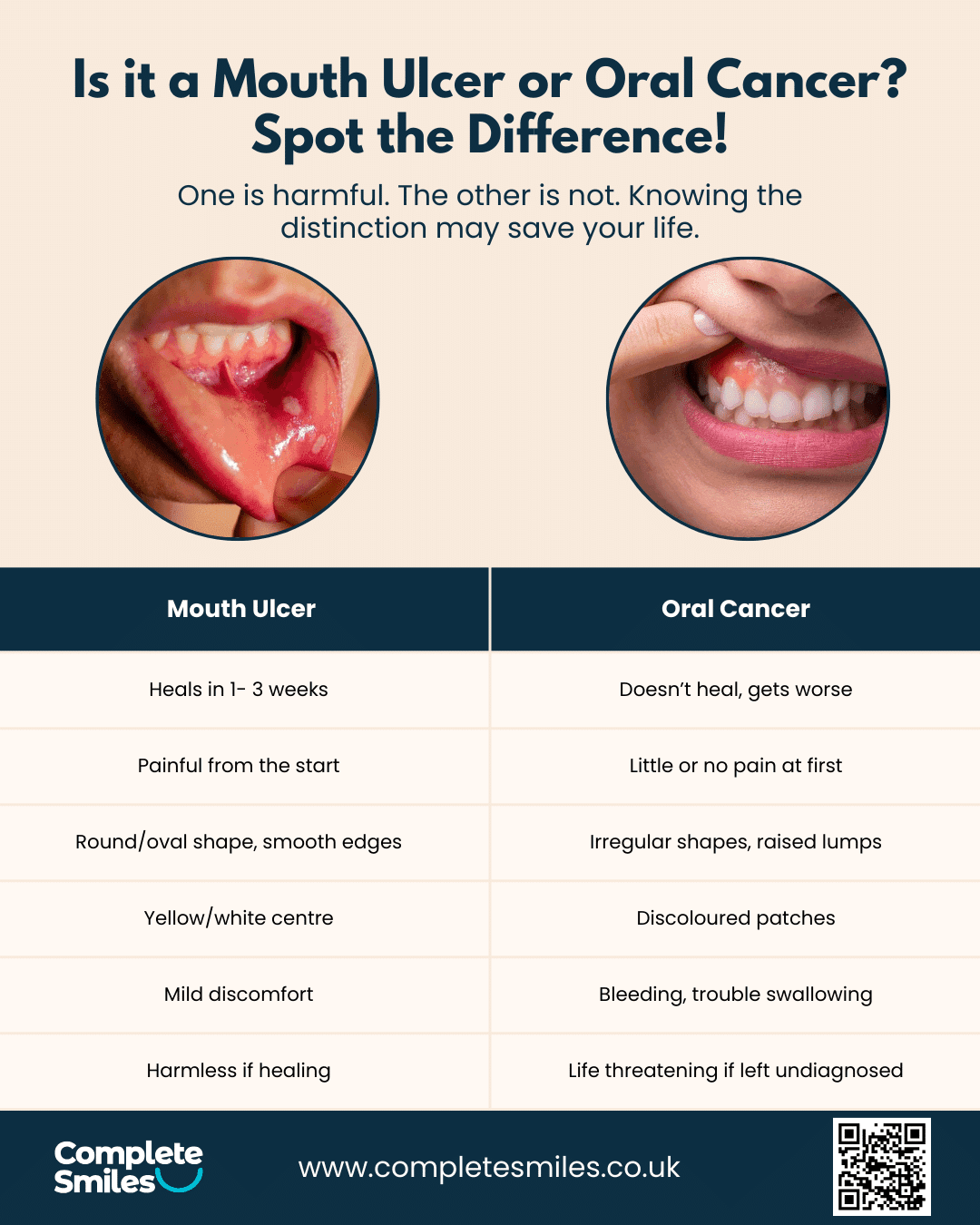
The most noticeable difference between a mouth ulcer and oral cancer is pain. Ulcers hurt, a lot. Oral cancer-related lumps in the mouth typically don’t hurt a lot; you may only feel a little bit of pain.
Mouth ulcers usually don’t bleed, unless the infection becomes severe or you bite or pop it. Oral cancer lumps may bleed, even if they don’t hurt much.
Importantly, a mouth ulcer will hurt but will start healing with self-care or dental hygiene treatment. Mouth ulcers don’t usually last beyond three weeks, if they do, then that’s a glaring sign the canker sore is a sign of mouth cancer.
The graph below simplifies these differences.
How Mouth Ulcers and Oral Cancer are Diagnosed
Mouth ulcers can be detected with a routine dental examination. Dentists do not usually need to perform diagnostic scans or run lab tests to check ulcers. However, if you often get ulcers, your dentist may recommend tests to diagnose the underlying cause.
Oral cancer can be diagnosed by either a dentist or a GP. Dentists are well-trained to diagnose early signs of oral cancer. A biopsy is necessary to confirm the presence of malignant cancer cells. Dentists may refer you to a cancer centre or a specialist for the biopsy. In addition, health professionals may use diagnostic scans, such as CTs or MRIs, to determine the spread.
Treatment for Mouth Ulcers
Mouth ulcers are relatively easy to treat at home because they heal on their own. You can do the following to ease discomfort and improve the healing process.
- Rinse your mouth with saltwater
- Use an over-the-counter topical gel for pain relief
- Stay hydrated
- Brush your teeth and floss as usual to prevent worsening of the infection
Dentists may prescribe gum treatments (periodontal) if your ulcers occur alongside other gum-related issues.
Treatment for Oral Cancer
Treating oral cancer is complex, usually takes months, and depends on the stage of the cancer when it is diagnosed. The treatment options available are similar to what you get for many other cancers:
- Surgical removal of the tumour and possibly lymph nodes
- Radiotherapy
- Chemotherapy for advanced cases
- Targeted therapy and immunotherapy, especially if the cancer has spread
Oral cancer does not respond to typical dental treatments, such as dental hygiene treatment. However, dentists may recommend such treatments if it’s safe for you to undergo while receiving cancer treatment.
When to Seek Medical Help
If you have a canker sore that doesn’t heal in 3 weeks or less, then it’s best to go see a dentist. Here are other signs that you should probably go see a dentist right away:
- Red or white patches in the mouth
- Persistent lumps or swelling
- Difficulty swallowing or speaking
- Unexplained weight loss
- Feeling weird tastes, such as a metallic taste in the mouth
Early Detection May Save Your Life
If you feel a small and painful lump in your mouth, it’s most likely a mouth ulcer. There’s no need to panic about oral cancer every time your mouth hurts. Oral cancer is scary but treatable, and more importantly, preventable.
The most ideal way to protect yourself from mouth cancer is to stop smoking and limit alcohol. Maintain good oral hygiene on a daily basis. And, at least once a year, visit a dentist for a general check-up, which will help detect early signs of oral cancer if you are an at-risk person.
Receive an Oral Cancer Screening Free with a Dental Check-up
Complete Smiles offers comprehensive general check-ups that includes oral cancer screening, in addition to gum disease screening and fluoride exposure testing. An annual check-up is highly recommended to rule out serious disease, and cancer, if you are in the high-risk category. You can call us or book an appointment online for a thorough diagnosis.

Malavi Sivakanesan
Malavi Sivakanesan is the principal dentist and co-founder at Complete Smiles in Harrow, Greater London. She is responsible for establishing the Complete Smiles brand throughout the United Kingdom and Europe and has 5 successful practices under her strong leadership.