November 25, 2025
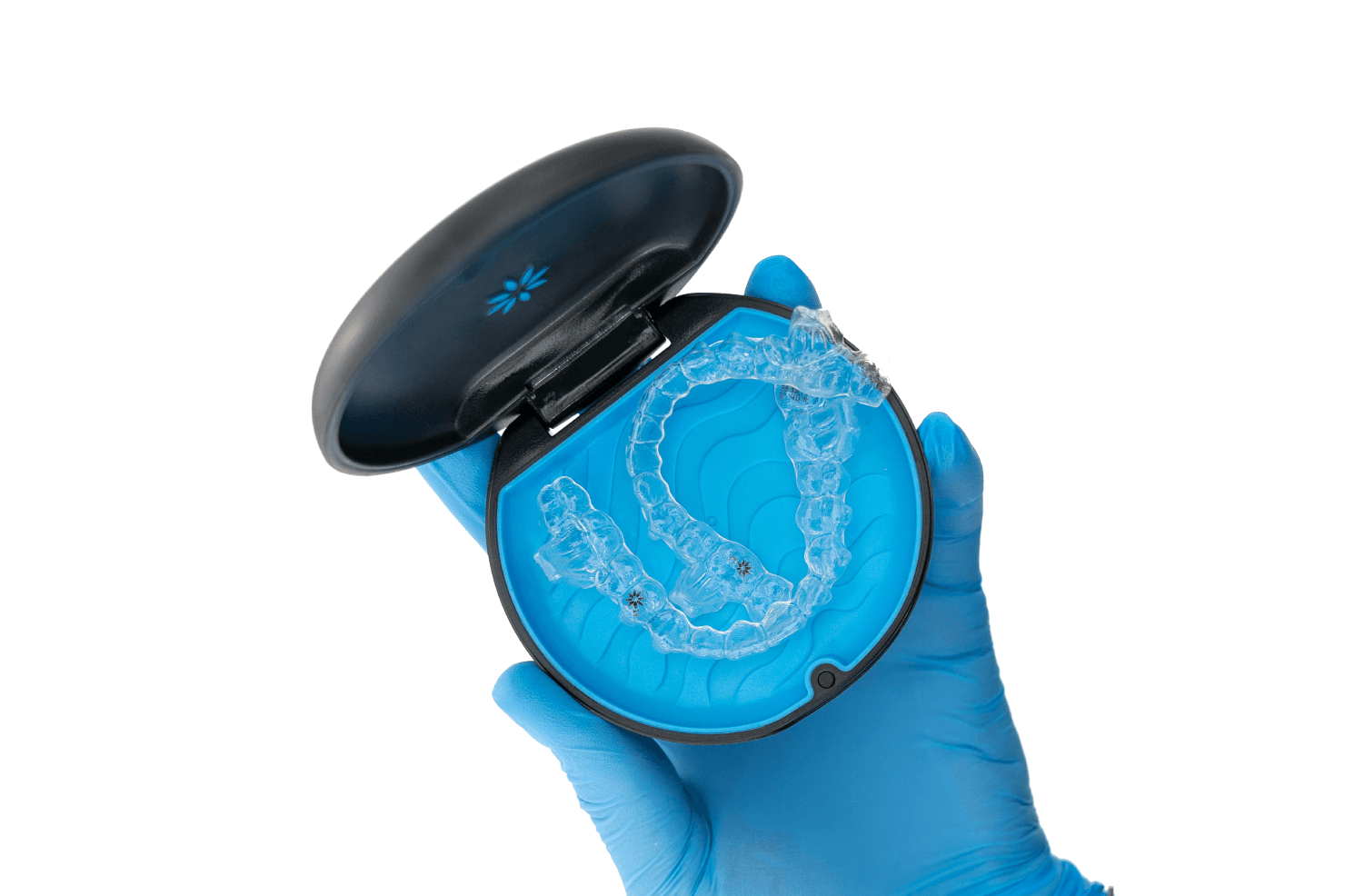
If you’re considering Invisalign in the UK you’ll quickly come across two main options: Invisalign Lite and Invisalign Full. Both use the same clear aligner technology, but they’re not the same.
This guide will explain the important differences between the two so you can make an informed decision with your dentist or orthodontist.
What is Invisalign Lite — The Budget-Friendly Invisalign Option?
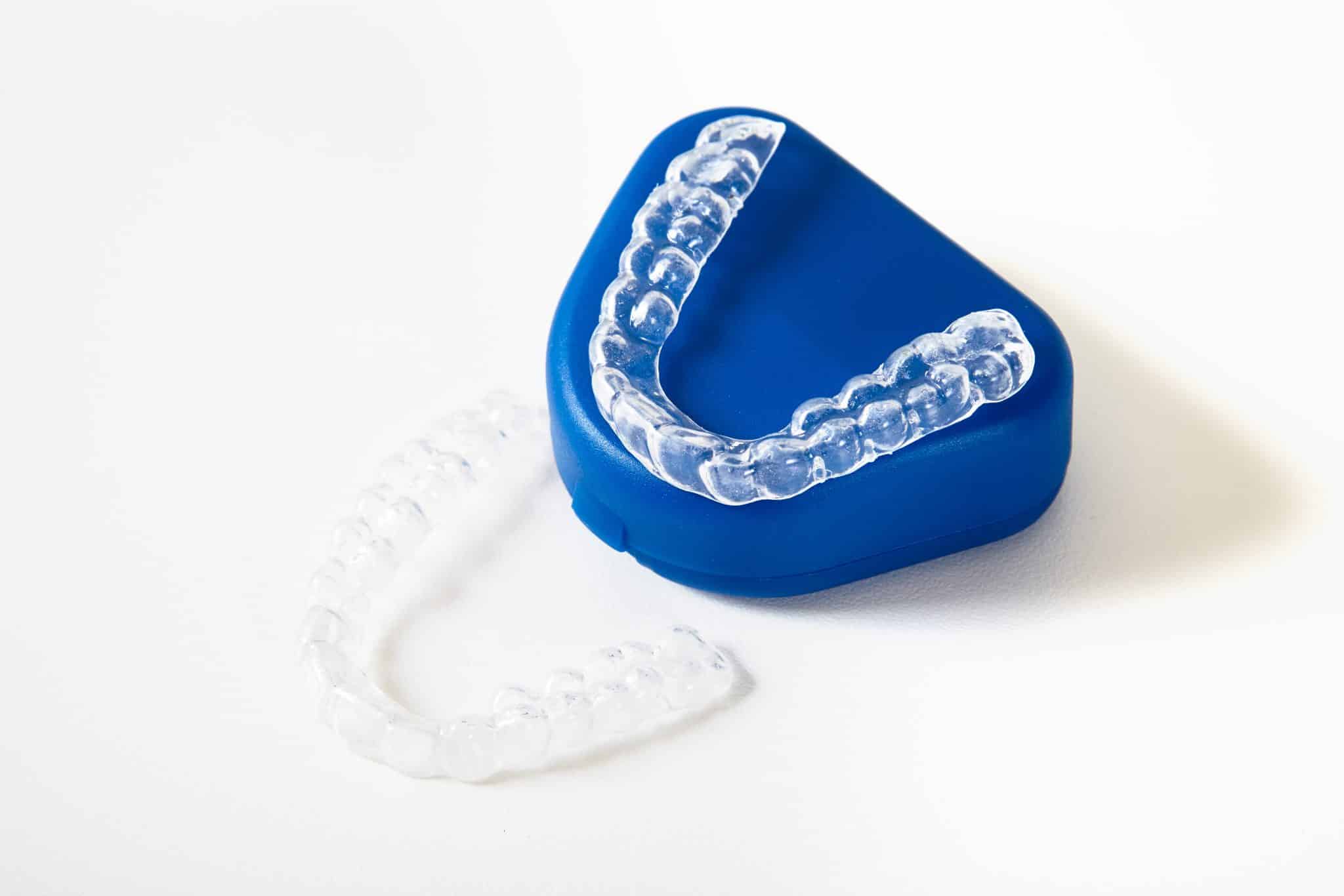
Invisalign Lite is designed for patients with mild to moderate orthodontic issues. This treatment is ideally suited for adults who want a quick, discreet fix without committing to a long treatment plan.
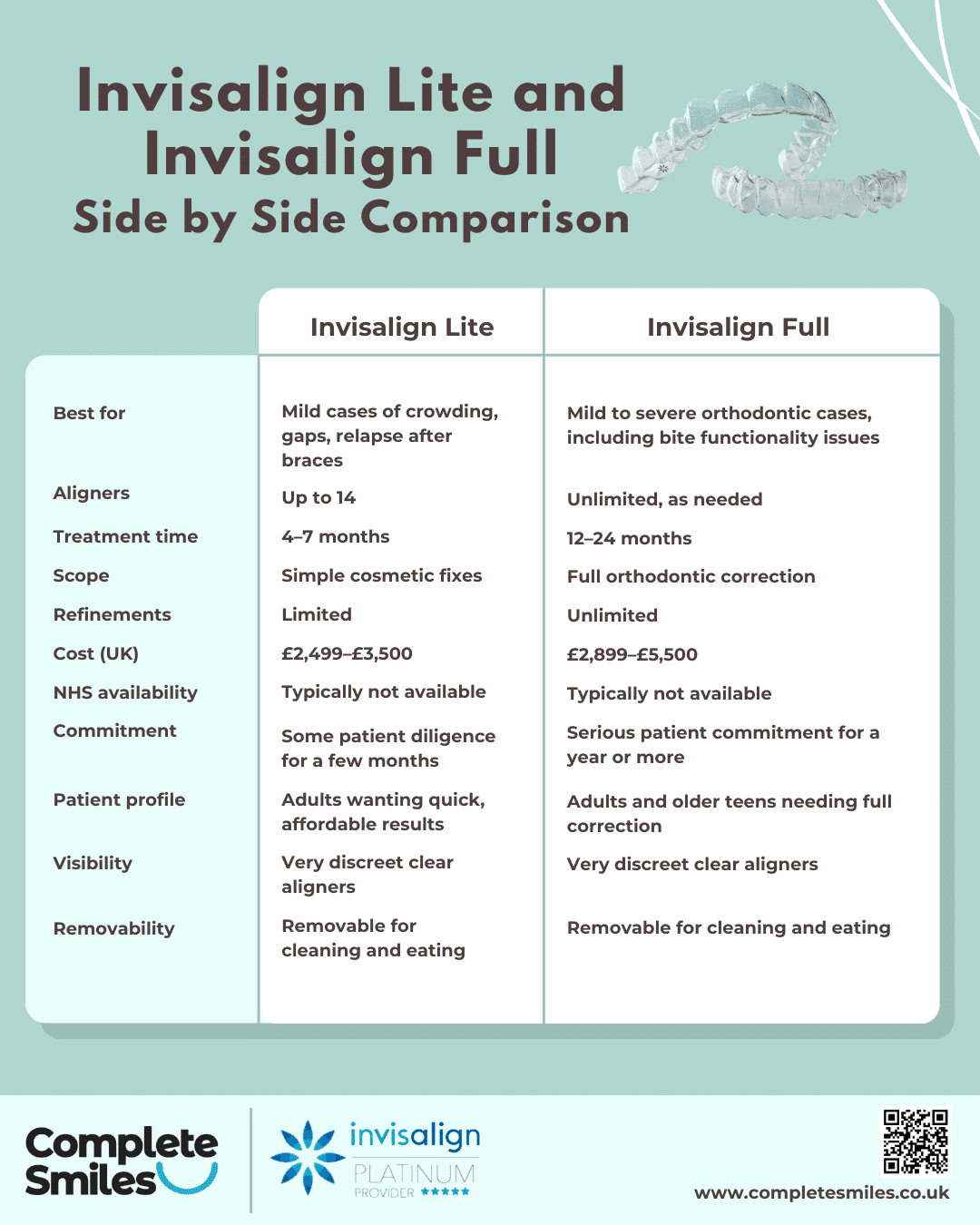
- Best for treating small gaps, mild crowding, minor underbite or overbite, or mild relapse after braces.
- Uses 10 to 14 aligners.
- Treatment takes around 4–7 months.
- Can be used for cosmetic reasons, such as improving the look of a smile before a special occasion.
- Suited for addressing small alignment issues before receiving dental veneers, crowns, or teeth whitening treatment.
Invisalign Lite is limited in scope, so dentists refer to it as a short-term orthodontic solution.
Because this treatment is much shorter than many other types of Invisalign, it is sometimes known as “cheap Invisalign”. Although not as costly as the Full version, Lite is only suitable for some patients as described above.
What is Invisalign Full?
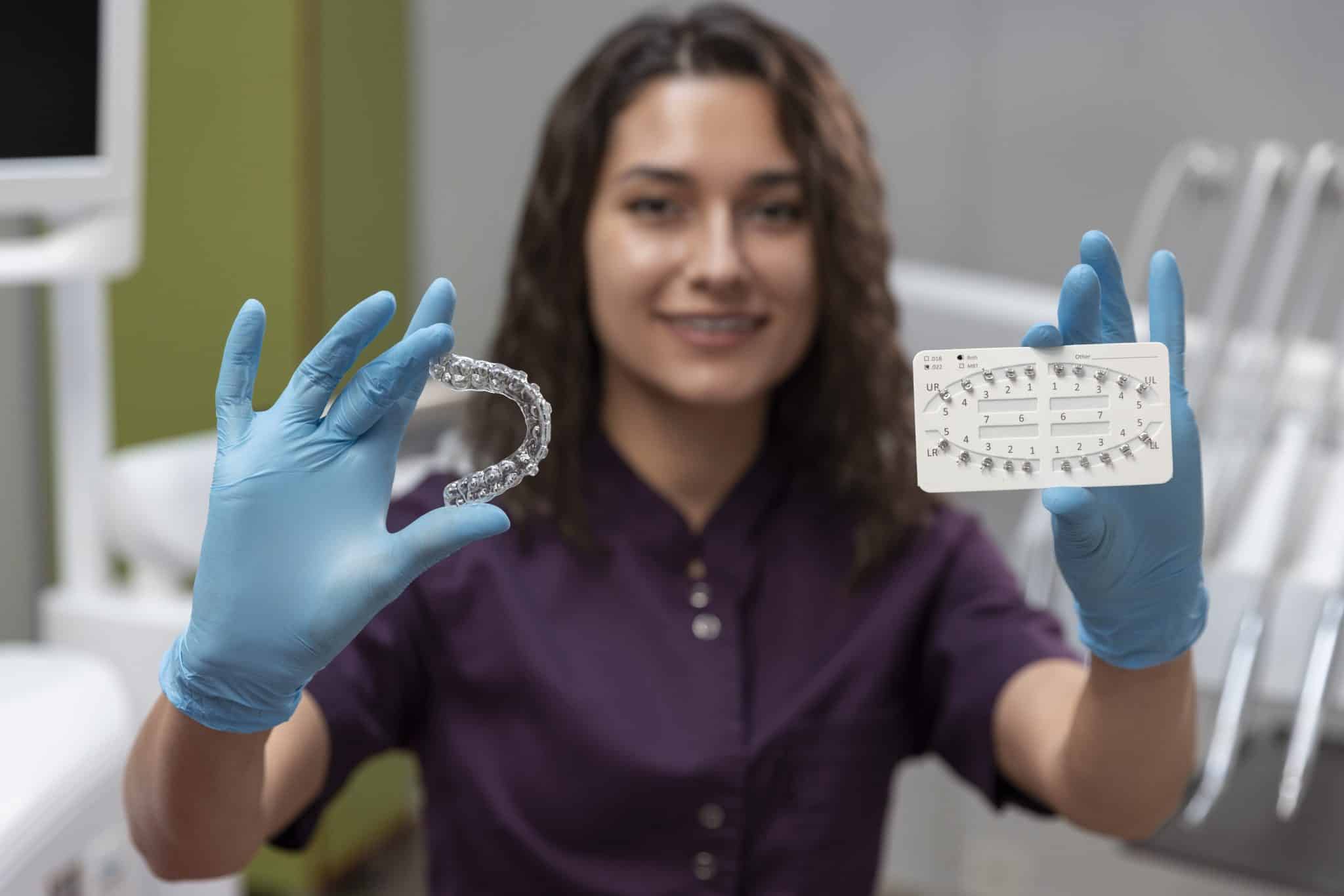
Invisalign Full is the comprehensive clear aligner treatment plan that can substitute for traditional braces. This system can address both moderate and severe orthodontic problems, including significant crowding, spacing, or bite misalignment.
- Best for treating mild to severe orthodontic cases, and some complex cases.
- Patients get unlimited clear aligners until all treatment goals are achieved.
- Treatment time typically takes 12 to 24 months but can continue for longer.
- Addresses a range of orthodontic problems, including overbite, underbite, crossbite, open bite, tooth gaps (not caused by missing teeth), and excessive crowding.
This is the option most orthodontists recommend when patients want a complete, long-term solution. The Full Invisalign treatment cost is the highest out of all types, but only because it can address complex to severe misalignment issues.
Invisalign Lite and Invisalign Full: Pros and Cons
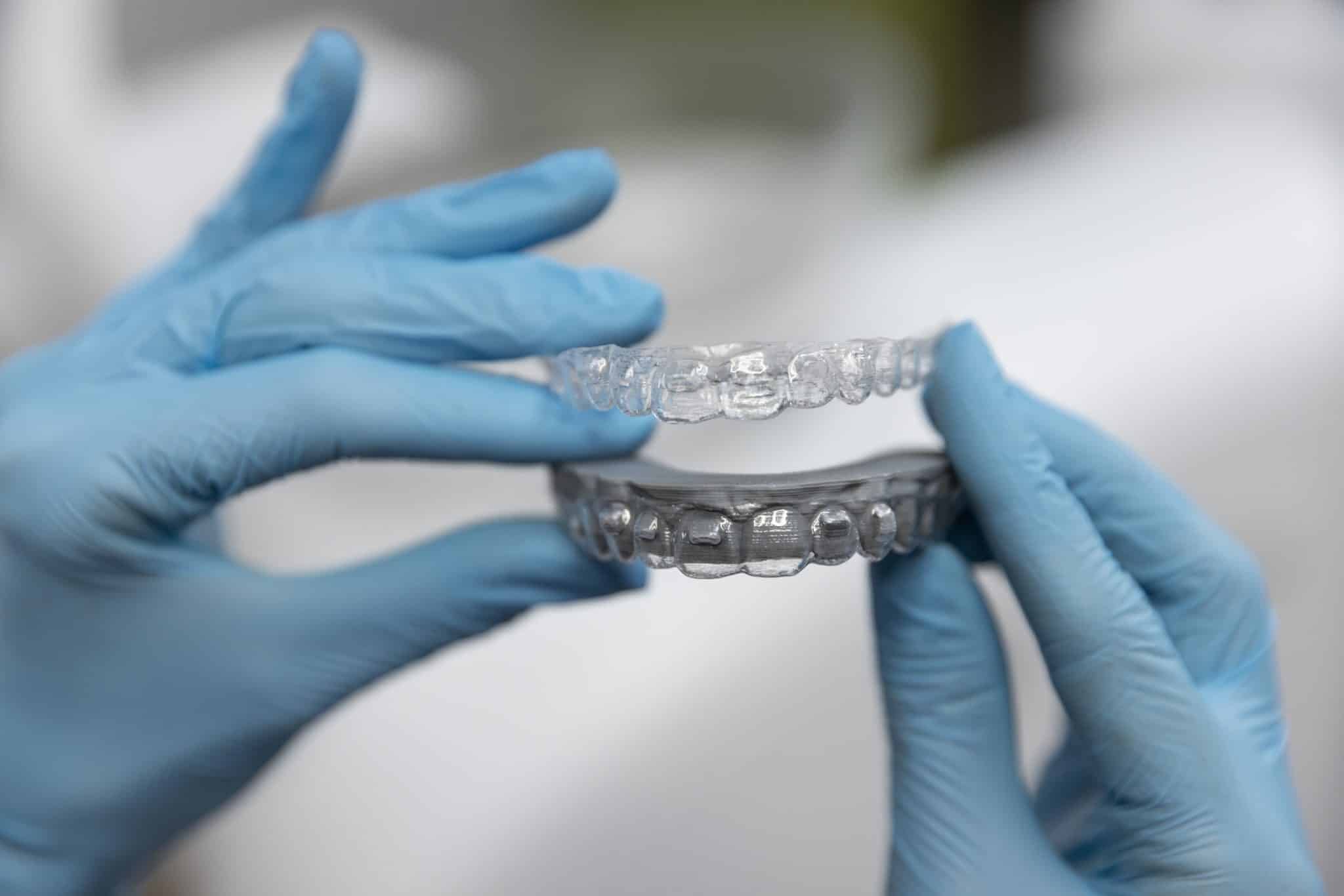
Both have distinct strengths but also a few drawbacks. Understanding these will help you set realistic expectations.
Invisalign Lite
The Main Benefits,
- Faster results in less than a year, making it ideal for patients seeking a quick fix.
- Costs are considerably lower compared to Invisalign Full.
- Fewer follow-up appointments because of shorter treatment time.
- Delivers predictable outcomes for mild cases. Works very well when the treatment goals are limited and clearly defined.
The Downsides,
- Limited in scope and therefore cannot correct moderate to severe orthodontic problems.
- Aligners are capped at 14. Patients do not receive unlimited refinements (additional retainers), unlike for Full.
- In some cases, the desire for fast results may result in under-treating dental problems, and patients may have to upgrade to Full anyway.
Invisalign Full
The Main Benefits,
- Offers highly effective and comprehensive correction even for complex cases. Reliable as traditional braces.
- Unlimited refinements to keep the treatment going until the dental problem is fully corrected.
- Patients can expect long-term stability for their conditions because Full addresses functional problems very effectively. Results are long-lasting with a lower risk of relapse.
- Can be used for older teenagers and adults alike.
- Precise and accurate correction based on personalised treatment plans.
The Downsides,
- The most expensive version of Invisalign available. Requires a bigger financial commitment than Lite.
- Treatment takes time and can last up to a year or more. This is not a quick fix.
- Patients need to be disciplined and comply with the long treatment plan to see results.
Invisalign Lite and Invisalign Full Side-by-Side Comparison
How to Know Which Invisalign Type is Right for You

Choosing between Invisalign Lite and Invisalign Full isn’t just about budget or treatment time. It’s also about matching the right treatment for your dental needs.
Invisalign Lite may be right for you if:
- You only have mild orthodontic concerns like minor crowding or spacing issues. For example, Invisalign Lite can effectively treat small gaps between the front teeth (diastema).
- You have experienced some relapse after using traditional braces.
- You experience minor relapse post braces. Many teenagers who wear metal braces notice their teeth shifting back as they age into adulthood. If this movement is mild, Invisalign Lite can treat it quickly and discreetly.
- Want aligners mainly to make your smile look nicer. Lite can straighten teeth without being as invasive as veneers or crowns.
- Need to see quick results. If you are looking to fix teeth in time for a special occasion, like a wedding, Lite can help you receive treatment in a few months.
Invisalign Full may be right for you if:
- You have serious or complex orthodontic issues that need to be addressed.
- You need functional dental correction rather than cosmetic improvement.
- You need highly effective bite correction for overbite, underbite, crossbite, or open bite. Invisalign Full is flexible enough to address these issues.
- You need highly effective bite correction for overbite, underbite, crossbite, or open bite. Invisalign Full is flexible enough to address these issues.
- You are willing to commit to a comprehensive treatment plan that will last at least a year and will involve multiple follow-up appointments.
- You are seeking a more comfortable orthodontic option than metal braces.
- You need inconspicuous dental correction. You can safely wear Invisalign Full aligners at work or school without being overly self-conscious.
There are some similarities between the two treatments as well. Both are highly discreet, removable, comfortable, and make daily oral care hassle-free.
Costs in the UK
Invisalign is not typically available through the NHS, and patients often need to receive this treatment from private practices. Therefore, costs can vary a lot between clinics.
Average costs of Invisalign you can expect in the UK in 2025:
- Invisalign Lite: £ 2,499 to £3,500
- Invisalign Full: £ 2,899 to £5,500
Some practices offer finance plans, to help patients better afford the treatment, with an Invisalign monthly cost instead of charging a full upfront fee. Plans may include interest-free periods for up to a year. This makes Invisalign Lite particularly cost-effective for patients who want a budget-friendly, short-term option.
Some practices offer finance plans to help patients better afford the treatment, with an Invisalign monthly cost instead of charging a full upfront fee. Plans may include interest-free periods for up to a year. This makes Invisalign Lite particularly cost-effective for patients who want a budget-friendly, short-term option.
The Main Takeaway
Invisalign Lite and Invisalign Full both use the same clear aligner technology, but they serve different orthodontic needs. Lite is ideal for quick, cosmetic improvements, while Full is designed for serious orthodontic correction.
Invisalign Lite is like a “short programme”, best for small or mild dental issues. Invisalign Full is the “complete programme”, best for complex correction, sometimes alongside surgery.
The best way to choose between the two is through a consultation with a qualified dentist or an orthodontist, who will assess your condition and prescribe the right treatment.
Get an Invisalign Consultation for Free with a Platinum Provider

Still now sure which type of Invisalign is right for you? We offer free consultations for patients interested in clear aligners with financial advice. Your consultation will be with a dentist certified as an Invisalign Platinum or Diamond provider, which means they are highly experienced in offering clear aligner treatment.
We also occasionally have advantageous Invisalign offers. Get in touch, with us to learn more or to book an appointment.
We also occasionally have advantageous Invisalign offers. Get in touch with us to learn more or to book an appointment.

Dr. Malavi Sivakanesan (292322)
Dr. Malavi Sivakanesan is the principal dentist and co-founder at Complete Smiles in Harrow, Greater London. She is responsible for establishing the Complete Smiles brand throughout the United Kingdom and Europe and has 5 successful practices under her strong leadership.