October 3, 2025
Dentures are a popular and affordable treatment for missing teeth. If you are considering this treatment, or are just curious about it, this guide will give you all the basic information you need to know about these dental appliances.
What Is Called a Denture?
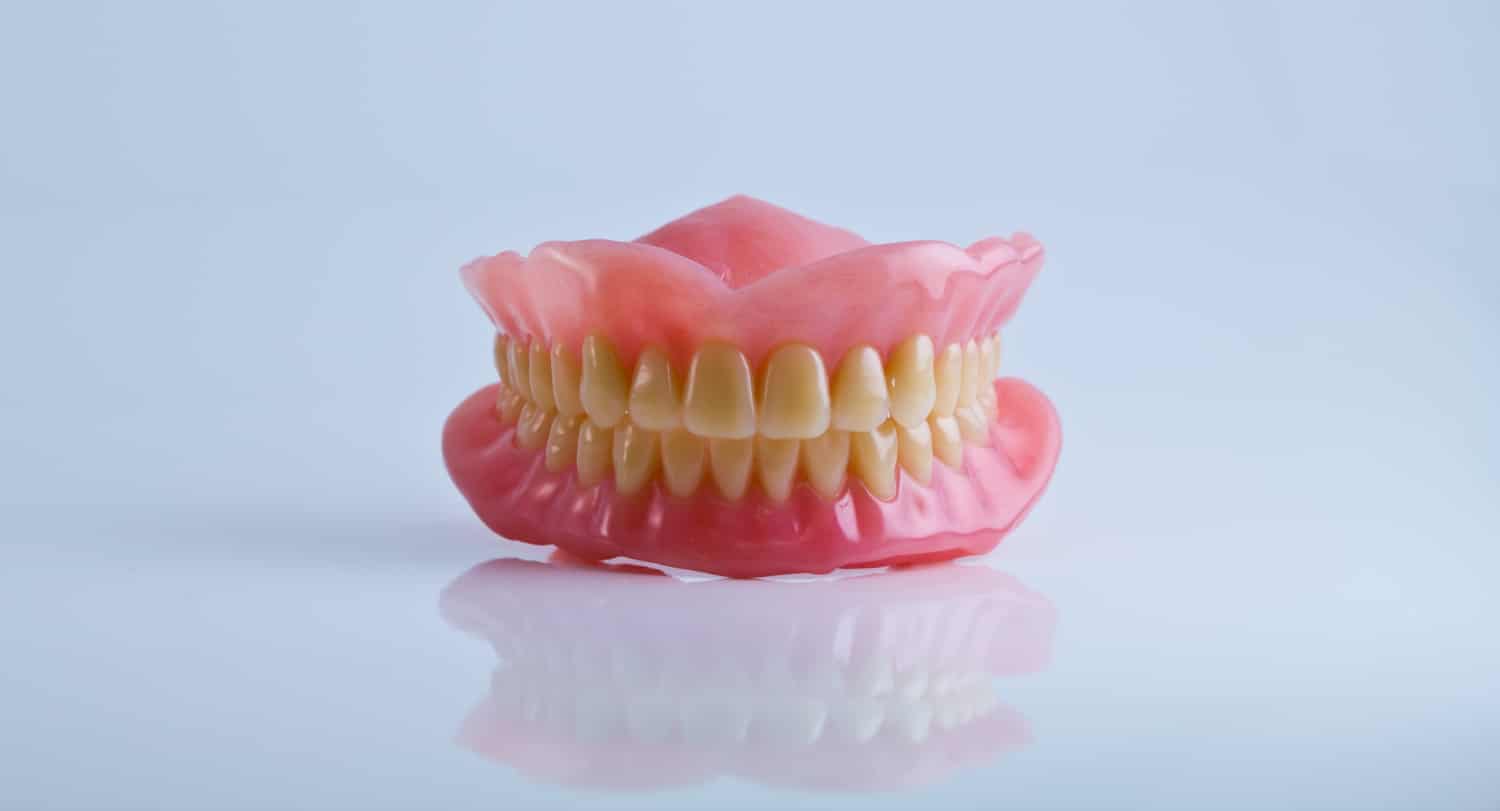
Dentures are false teeth that usually rest on your gums to replace missing teeth (some dentures may clip onto adjacent teeth). They are typically made up of a plastic (usually acrylic) body to resemble natural teeth and gums. These oral devices can replace missing teeth on the upper or lower jaw, or both, depending on how many teeth are missing.
What Is the Use of Dentures?
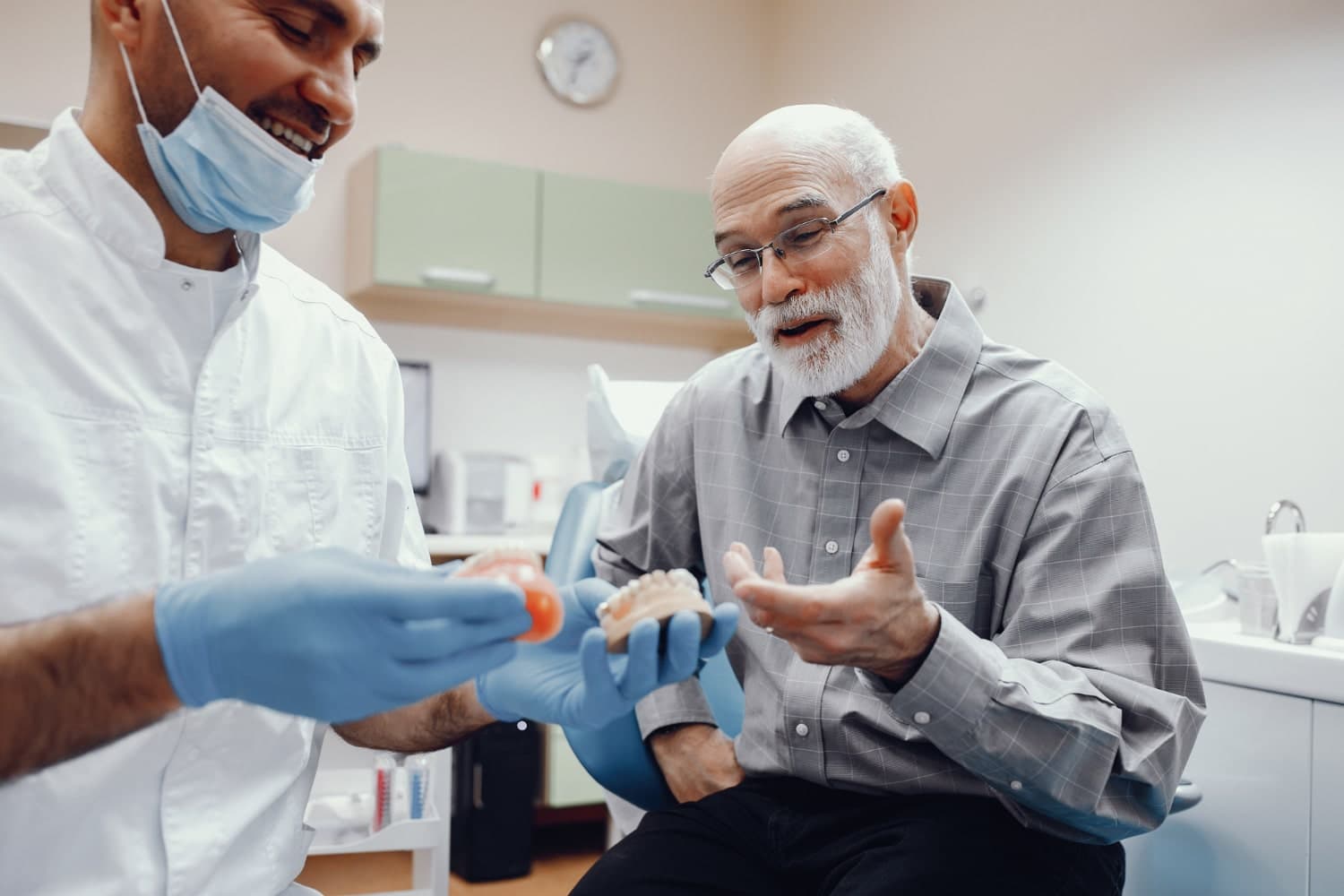
Dentures can help you chew and speak normally. You will be able to regain at least some of the bite strength you lost because of missing teeth. They will also fix the gaps in your smile, allowing you to socialise with confidence once more.
Who needs Dentures?
Dentures are a widely used treatment for those with one or more missing teeth. If you have lost teeth due to trauma, gum disease, jawbone loss, or ageing, you can regain your smile with dentures. These devices restore most of the functionalityteeth provide. They are not intended as a cosmetic device to improve the appearance of smiles if the natural teeth are still attached.
The Advantages of Dentures
- The most affordable way to replace missing teeth
- Regain your smile and avoid unsightly tooth gaps
- Largely restore the ability to chew and bite
- Retain clarity of speech
- Provide support to the facial structure to prevent a sunken look
- Most types of dentures don’t require oral surgery
- Suitable for patients with jawbone loss or similar medical conditions
- Highly customisable to improve comfort and aesthetics
- Removable dentures are convenient and easy to clean
- Cost-effective to adjust or replace if needed
- Faster results compared to other treatments for missing teeth
- Usually covered by health insurance plans or can be obtained via the NHS (eligibility requirements apply)
The Drawbacks of Dentures
- Can feel uncomfortable, especially when first worn
- Without implants, dentures may slip or move while speaking or eating
- Needs to be cleaned daily to avoid gum problems
- Doesn’t offer the same bite strength as natural teeth or implant-supported teeth
- May require constant adjustment for patients whose jaws are healing or are experiencing bone loss
- Can cause excessive saliva production in some wearers, particularly when first worn
- Some wearers may experience dry mouth
Types of Dentures
There are several different types of this treatment to consider. Many are removable, but some are not.
Full Dentures
You may better know these as traditional dentures. Full dentures support a complete set of teeth per arch. They can rest on the roof of your mouth or a jawbone ridge. They can be snapped in and out of your mouth as needed. While they usually offer a good fit, in some cases, wearers may need to use glue to make the device stay in the mouth.
These are made of artificial teeth and a base that resembles the gumline. The design can be customised to resemble the natural colour of the wearer’s gums and existing teeth.
Full (Complete) Dentures
Full dentures support a complete set of teeth per arch. They rest on the roof of the mouth or a jawbone ridge and can be snapped in and out as needed. They are made of artificial teeth and a base that resembles the gumline and can be customised to match natural gum colour.
Partial Dentures
Partial dentures are designed to replace multiple missing teeth, but not all teeth on a jaw. These devices are designed much like full dentures. Unlike the full version, the partial appliances come with clasps to hold onto nearby natural teeth for better support.
Similar to the full version, partial dentures can be customised to match the existing teeth and gums of the wearer for a natural look.
Implant-Supported Dentures
Unlike other types, implant-supported dentures are not removable. The denture is fixed to your mouth by surgically inserted implants (a titanium post that acts similarly to a natural tooth root). This type of denture offers excellent support and functionality similar to natural teeth. However, you will need a dental appointment to remove them.
Implant-supported dentures require a different type of care compared to removable dentures. Because you can’t get them out for cleaning, you must brush and floss regularly to prevent food from getting stuck between the dentures and your gums. Most dentists recommend occasional dental hygiene checkups to keep implant-supported dentures in the best shape.
Implant-Retained Dentures
Implant-retained dentures are supported by implants, but unlike implant-supported devices, these are removable. Because of that, these devices are sometimes advertised as “snap-on” dentures.
Implant-retained dentures offer more stability than traditional dentures and keep the convenience of removability. You will need oral surgery to receive the implants first. Then your dentist will custom-design the denture to match your mouth. Unlike the implant-supported variety, implant-retained dentures are more convenient to clean.
Immediate Dentures
Immediate dentures are quickly made devices usually used after tooth extractions. They are intended to be temporary and should be replaced after some time, typically within a year.
Most people receive immediate dentures as a fast replacement for teeth in an existing denture or as a temporary device for those recovering from oral surgery for missing teeth. Some dentists provide immediate dentures until the proper dentures are finalised. They will restore your ability to bite and smile for a few months, after which you will need a proper replacement.
Denture Materials
Acrylic Resin
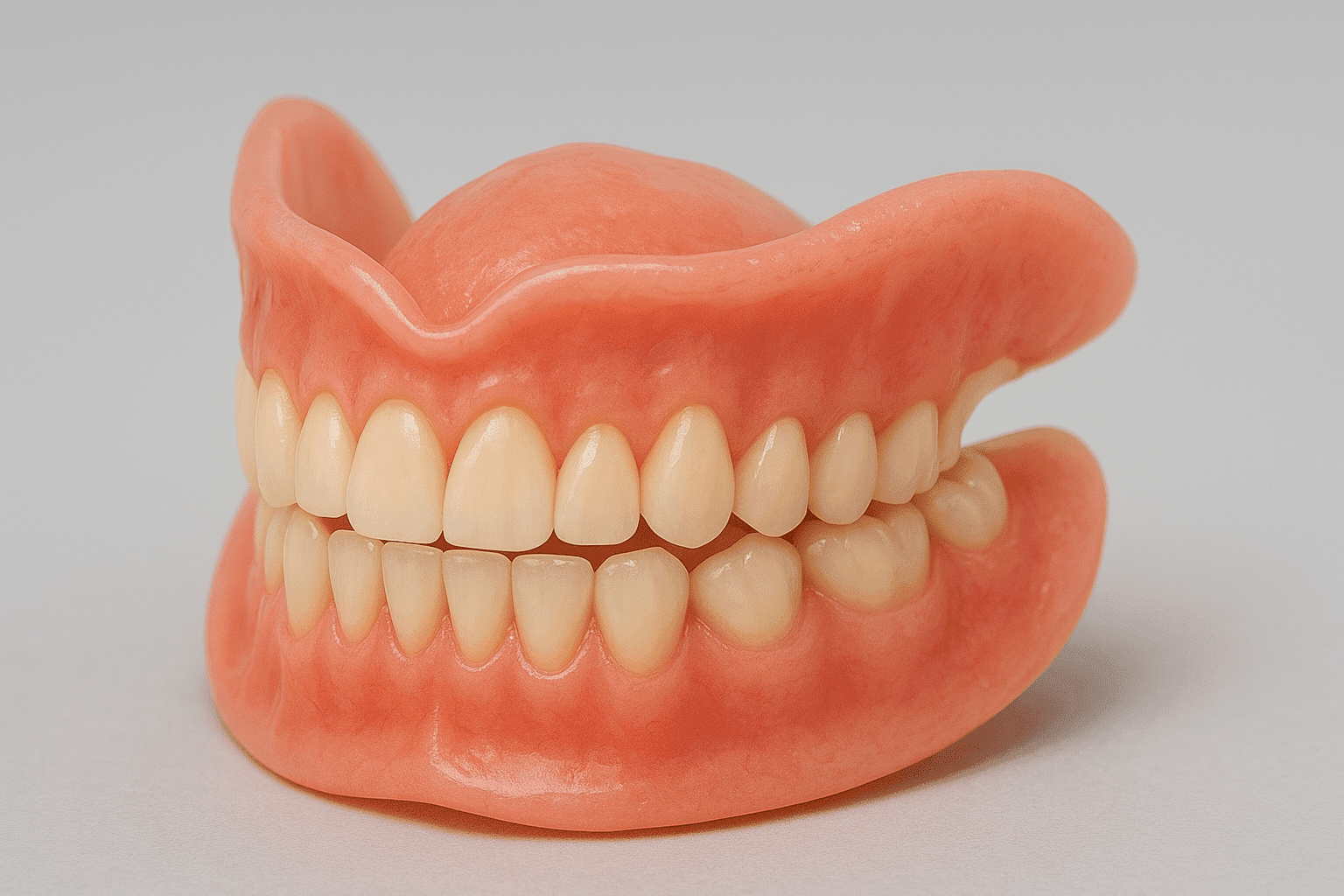
Acrylic, or in other words, plastic, is the most commonly used material for dentures. It keeps the devices lightweight, easy to adjust, and affordable. Acrylic can be moulded to mimic the natural appearance of teeth and gums.
On the other hand, plastic dentures tend to be less durable compared to other materials. They can also stain quickly without diligent care. Dentists make these dentures thicker to offer adequate stability, which can make them a bit uncomfortable to wear.
Porcelain (Ceramic)
Porcelain is used for the artificial teeth portion of dentures and is usually supported by a base made from acrylic or metal. Porcelain is a popular material for designing teeth because it looks very close to real enamel.
Porcelain dentures are largely resistant to staining and long-lasting. However, the material is heavier than plastic, so it may weigh down in your mouth. Porcelain is not recommended for partial dentures supported by adjacent natural teeth because the material can wear down real enamel.
Thermoplastic Resin
Thermoplastic resins, like nylon, are used to make flexible dentures. Unlike the rigid regular dentures, the flexible ones are bendable. They may fit more snugly on your gums and are considerably lighter than other materials. They also have a translucent look that makes the denture look very lifelike.
Thermoplastic is usually used for partial dentures, as full dentures require more rigidity to maintain stability. While they are quite comfortable, thermoplastic dentures are difficult to adjust.
Metals
Metal-based dentures are made from titanium or cobalt-chromium (sometimes called just chrome) and are often combined with acrylic. Only the framework or the base of the denture consists of metal, and the artificial teeth will be made from another material. These dentures are commonly used with implants for their sturdiness.
Metal-based dentures are thinner and stable, but also not always as natural-looking as other types. The metal parts may sometimes poke out. They are also considerably more expensive than plastic.
Hybrid
Hybrid dentures use a combination of materials to design dentures that offer good aesthetics as well as better stability. Combinations can consist of metal and acrylic or metal and porcelain. These combos are often used for implant-supported dentures. Making hybrid dentures is more complex, and therefore they tend to be considerably expensive.
Thermoplastic (Flexible) Resin
Thermoplastic resins like nylon are used to make flexible dentures. Unlike rigid traditional dentures, flexible ones are bendable and may fit more snugly on the gums. They also have a translucent, lifelike look. Thermoplastic is usually used for partial dentures, as full dentures require more rigidity for stability.
Metal-Based Dentures
Metal-based dentures use a titanium or cobalt-chrome framework combined with acrylic or porcelain. They are thinner and more stable than pure acrylic options. They are commonly used with implants for their durability, though they are more expensive and less natural-looking than other types.
Hybrid Dentures
Hybrid dentures combine materials — such as metal and acrylic, or metal and porcelain — to offer both good aesthetics and stability. Often used for implant-supported dentures, they are the most complex and expensive option.
Cost of Dentures in the UK
The cost of dentures depends on how many teeth need replacing, the material, and the type. The cheapest implants are available from the NHS for around £320. However, if you require different materials or a type of denture, you may have to buy it from a private dentist at a higher price.
This table gives an overview of the typical costs of dentures in the UK as of 2025.
| Denture Type | Typical Cost in UK in 2025 |
|---|---|
| Full Dentures – Acrylic Resin | £700 – £1,400 (per arch) |
| Full Dentures – Porcelain | From £2,000 (per arch) |
| Full Dentures – Thermoplastic Resin | From £1,500 (per arch) |
| Full Dentures – Chrome | £750 – £1,500 (per arch) |
| Full Dentures – Titanium | Custom pricing |
| Partial Dentures – Acrylic Resin | £850 – £1,300 (per arch) |
| Partial Dentures – Porcelain | From £1,500 (per arch) |
| Partial Dentures – Thermoplastic Resin | £750 – £1,500 (per arch) |
| Partial Dentures – Chrome | £1,285 – £1,500 (per arch) |
| Implant-Supported Dentures – Acrylic Resin | £12,000 – £16,000 (both arches) |
| Implant-Supported Dentures – Porcelain | From £19,000 (both arches) |
| Implant-Supported Dentures – Chrome/Titanium | Custom pricing |
| Implant-Retained Dentures – Acrylic Resin | £7,100 – £9,000 (both arches) |
| Implant-Retained Dentures – Porcelain | From £10,000 (both arches) |
| Implant-Retained Dentures – Chrome/Titanium | Custom pricing |
| Immediate Dentures – Acrylic Resin | £600 – £1,200 (per arch) |
| Flexible Dentures – Thermoplastic Resin | From £750 (per arch) |
| Denture Type | Cost at Complete Smiles |
|---|---|
| Acrylic (Per Arch) | From £700 |
| Chrome (Per Arch) | From £750 |
| Flexible (Per Arch) | From £750 |
| Set of Full Dentures – Acrylic | From £1200 |
| Chrome Dentures – Full Set | From £1495 |
| [separate section] | |
| Additions (Per Tooth) | From £100 |
How to Finance Dentures
- Check if you are eligible for Band 3 NHS coverage for dental care. This option may not cover all types of dentures.
- Ask your health insurer if the plan covers the cost. This may involve a price cap.
- Find a private dentist who offers monthly payment plans. You can avoid a massive one-time payment and manage the total cost over several months.
How to Receive Your First Dentures: A Brief Explanation of the Process
Step 1: Dental Consultation
A dentist will first examine your mouth to check if dentures are suitable for your condition. If they are, the dentist will then discuss what type of dentures are best suited for you. This part will involve taking your medical considerations as well as budget limitations into account. Then, the dentist will take 3D scans and impressions of your gums and teeth to make the dentures.
Step 2: Customising the Dentures (Waiting Period)
You will now have to wait until your dentures are tailor-made to comfortably fit in your mouth. The waiting period will depend on the type of denture you requested. For immediate dentures, you will only need to wait a few days. In some cases, your dentist may provide you with immediate dentures until your proper dentures are made.
Step 3: Fitting Appointment
When the dentures are ready, the dentist will ask you to return to the clinic for the fitting. How suitable your dentures are will be determined by the fit, comfort, and natural appearance. The dentist will make any adjustments if necessary. Most patients are able to go home with a new set of teeth after this appointment.
Step 4: Check-up Appointment (Optional)
You may need to go in for a checkup to see how well you are adjusting to your dentures. This step is optional. You can choose to do so unless the dentist requires it. You may need follow-up appointments for dentures with implants.
Alternatives to Dentures
Dentures are not the sole treatment for missing teeth. They are usually the most affordable option for most people. Here are other missing teeth fixes you can consider:
Dental Implants
Dental implantsare titanium (or rarely zirconia) posts that a dental surgeon drills into your jawbone (or, in some cases, are attached to your cheekbone or gums). The implants act as artificial tooth roots to support artificial teeth. Once the implants are healed, you will receive a dental crown that resembles natural teeth.
Dental implants are considered a “permanent” solution to missing teeth because they remain in your jaw unless a complication requires removal (which is very rare). They offer more stability and bite strength compared to dentures. However, implants tend to be considerably more expensive than dentures.
Dental Bridges
Dental bridges quite literally “bridge” the gap caused by one or more missing teeth. The artificial teeth in a bridge are supported by adjacent natural teeth and are fixed in place. Bridges are not removable like most types of dentures. They tend to be more expensive than dentures (depending on how many teeth you need replacing) but less expensive than implants.
FAQs
How Long Do Dentures Last?
Most dentures can last 7 to 10 years. Immediate dentures typically last only a year, at which point you will need to replace them. The longevity of the dentures may depend on the materials they are made from.
Which Type of Denture Is Best?
The best type of denture depends on individual needs and fit. Some people like snap-on dentures because they are affordable and convenient. Those who like stability prefer dentures with implants. The comfortable fit of flexible dentures is preferred by some. It all depends on your personal preferences and medical requirements.
Can You Eat with Dentures?
Yes, you can eat with dentures, and it is, in fact, one of the reasons many people choose dentures. With dentures, you can regain most of your normal chewing ability and will be able to eat as usual. If you are just starting this treatment, you can stick to soft foods until you get used to your new tooth restoration device. Don’t forget to properly clean your dentures daily after eating with them.
How Long Does It Take to Get Used to Dentures?
Most people get used to dentures in around two to three weeks. However, this will depend on the person. Some may get used to them sooner, while others take a while. You can ease the transition by sticking to a soft foods diet for the first week or so of wearing dentures. If the dentures continue to be uncomfortable, you can ask the dentist to make adjustments or try a different material.
Can You Wear Dentures at Night?
No, you shouldn’t wear dentures at night because doing so can increase the risk of gum infection. If you grind your teeth in your sleep, dentures may damage the gums. Dentists recommend that you sleep without removable dentures.
Get Your Dentures with Complete Smiles for Comfortable and Natural-Looking Results
Dentures are a tried and tested treatment for tooth restoration. Complete Smiles clinics have some of the most experienced dentists in smile restoration. With one of our dental specialists, you can find the most comfortable and fitting type of denture you need at an affordable price.
We offer financial consultations for patients who may need them. Our prices are cost-effective without compromising quality. We offer a price match guarantee to give our patients the most cost-effective option. Contact us to learn more about prices and types of dentures available at our clinics in the UK.

Dr. Malavi Sivakanesan (292322)
Dr. Malavi Sivakanesan is the principal dentist and co-founder at Complete Smiles in Harrow, Greater London. She is responsible for establishing the Complete Smiles brand throughout the United Kingdom and Europe and has 5 successful practices under her strong leadership.